

It happens every single day in dental practices around the world. The doctor finishes their exam, diagnoses a crown, explains the clinical reasoning, and steps out of the operatory. The second the door closes, the patient turns directly to the assistant and asks the real question:
“Can’t I just get a filling instead?”
When patients ask this, it usually comes down to two things: fear of a more invasive procedure and the price difference. As Jennifer Paxton highlighted in a recent Team Talk podcast episode, doctors love to go down clinical rabbit holes that leave patients confused.
To help your patients choose the best long-term care, the entire team needs to speak the same patient-friendly language. Here is how to break down the difference between a filling and a crown simply, clearly, and effectively.
1. Fillings Just Plug the Hole
The easiest way to explain a filling to a patient is to compare it to a pothole in the road.
A filling does a fantastic job of plugging a hole where decay used to be, but it does not add any structural strength to the tooth. It relies entirely on the remaining healthy tooth structure to hold it in place.
If you put a massive filling into a tooth that is already structurally weak, cracked, or heavily decayed, that filling acts like a wedge. Every time the patient chews, that wedge places pressure on the weak walls of the tooth, drastically increasing the risk of a catastrophic break.
2. Crowns Protect Circumferentially
When a tooth is cracked, fractured, or has lost too much structure, plugging a hole isn’t enough. It needs reinforcement.
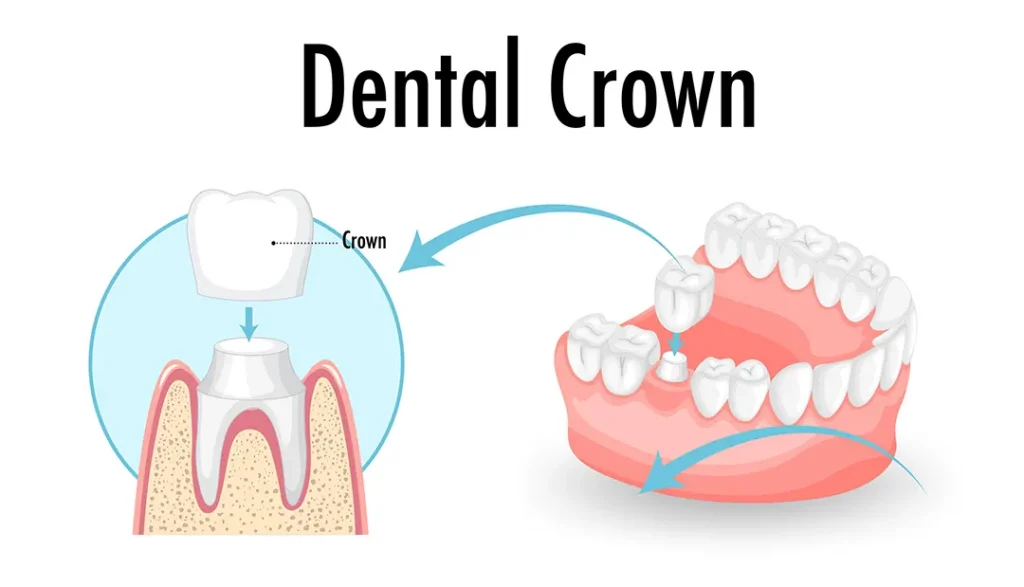
A crown wraps entirely around the tooth circumferentially. While it cannot magically “heal” a crack, it acts like a strong structural band that holds the remaining pieces of the tooth together.
Patients often say, “I’ll just wait until it breaks to get the crown.” You must gently remind them that teeth are like windshields, once a fracture starts, you cannot control how far or how deep it travels. If a crack runs vertically down into the root system, the tooth can become completely unsavable. Getting the crown early prevents a simple fix from turning into an extraction.
3. The Root Canal Rule
Another critical area where patients try to skip the crown is right after a root canal. Because a root canal removes the nerve and blood supply, the tooth is no longer alive. Over time, it becomes highly brittle and prone to fracturing under normal chewing forces.
Too many patients think, “I’ll do the root canal this year and wait for my insurance to renew next year to get the crown.” If that brittle tooth splits down the middle during those twelve months, the time, energy, and money spent on that root canal are completely wasted. A root canal and a crown must always be viewed as a package deal.

Shifting from “Expensive” to “Longest-Lasting”
Doing a cheap filling on a tooth that genuinely needs a crown isn’t doing the patient a favor. It risks their time, money, and oral health on a temporary patch that might only last six months. Recommending a crown isn’t about pushing a higher-priced procedure, but providing the most predictable, longest-lasting solution to save their smile.
Calibrate Your Team with Pivot Dental Solutions
When your clinical and administrative teams are perfectly aligned on how to answer tough patient questions, your case acceptance naturally skyrockets. If your team struggles to communicate value or feels uncomfortable discussing treatment costs, they need the right verbal tools and background education.
At Pivot Dental Solutions, we provide a comprehensive team training program designed specifically for small, doctor-owned practices. We bridge the training gaps for front-office staff and dental assistants, empowering them with the confidence and communication strategies needed to support your diagnoses and grow practice revenue sustainably.
Ready to transform your team’s communication and boost your production?
Let’s build a highly confident, fully aligned team together. Click here to schedule your complimentary 15-minute Discovery Call with Pivot Dental Solutions. We will walk you through the real operational needs of your business and show you how proper team calibration can make a massive difference in your practice’s income.